Create your own ecommerce website and start selling successfully with ShopWired today


SEO for Ecommerce Landing Pages: Best Practices To Rank on SERPs
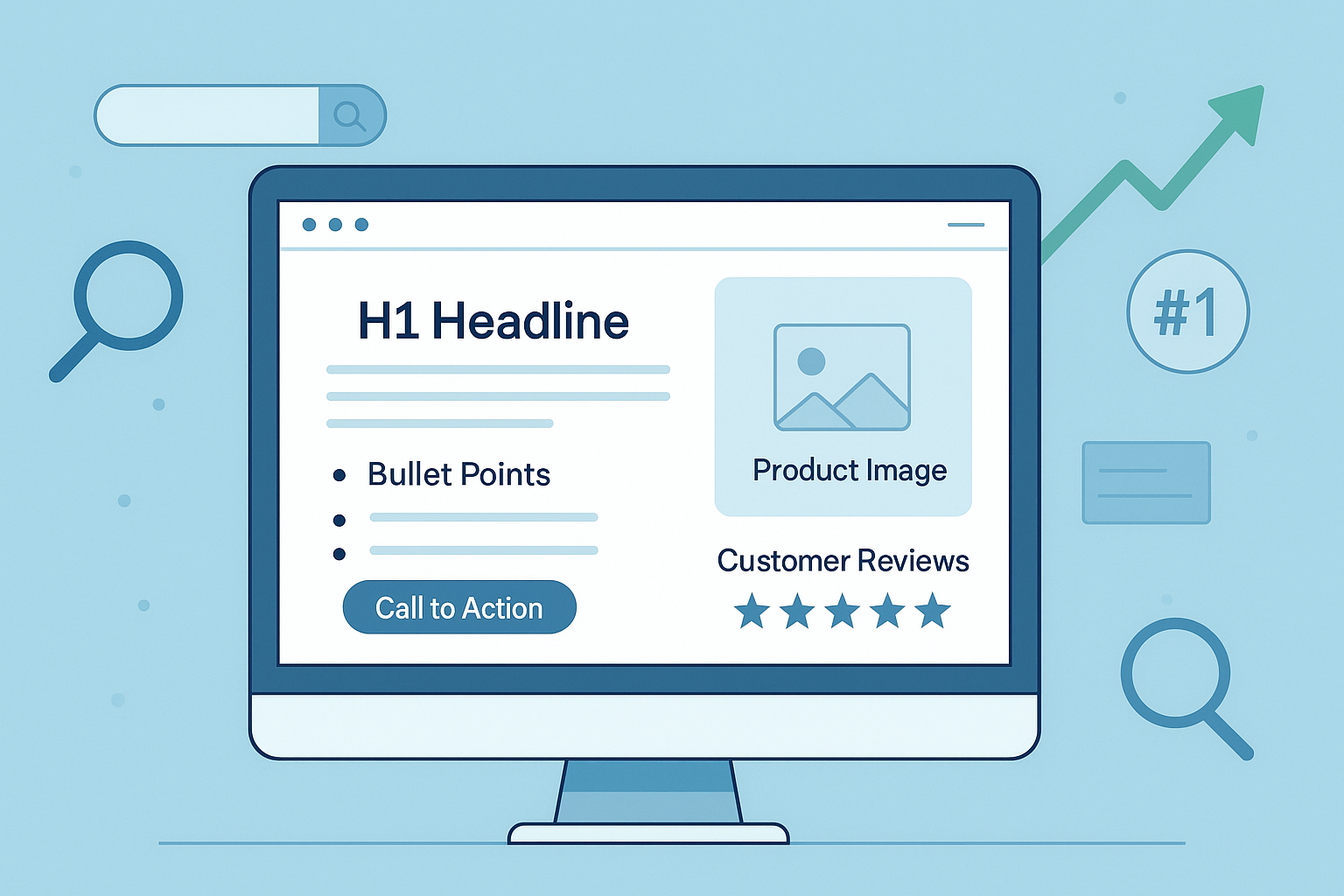
So, you’re building a new landing page. Maybe there’s a big offer coming up, a new product range you want to spotlight or you just need a focused page to tie in with your latest campaign. You’ve got the design mapped out, the message feels strong, but now you’re wondering: how do I actually get people to find this page online?
That’s where SEO comes in.
Search engine optimisation (SEO), helps your landing page gain visibility by getting it in front of the people who are already searching for what you offer. No need to spend money on ads or run expensive marketing campaigns, SEO lets you take advantage of organic interest in your products or services.
In this guide, we’ll show you how to create ecommerce landing pages that rank well, drive clicks and help you sell more.
Let’s get started.
Table of Contents
- Why Your Landing Pages Need SEO
- How to Optimise a Landing Page for SEO
- 1. Do Keyword Research First
- 2. Structure the Page for SEO/Readability
- 3. Optimise Your Metadata
- 4. Optimise the “Above the Fold” Section
- 5. Use Internal Links to Support SEO and Navigation
- 6. Optimise for Page Speed and Mobile
- 7. Improve UX Signals That Influence SEO
- 8. Make It Easy to Take Action
- 9. Track Performance and Improve Over Time
- Conclusion – Make Sure Your Site Is Optimised for Success
Why Your Landing Pages Need SEO
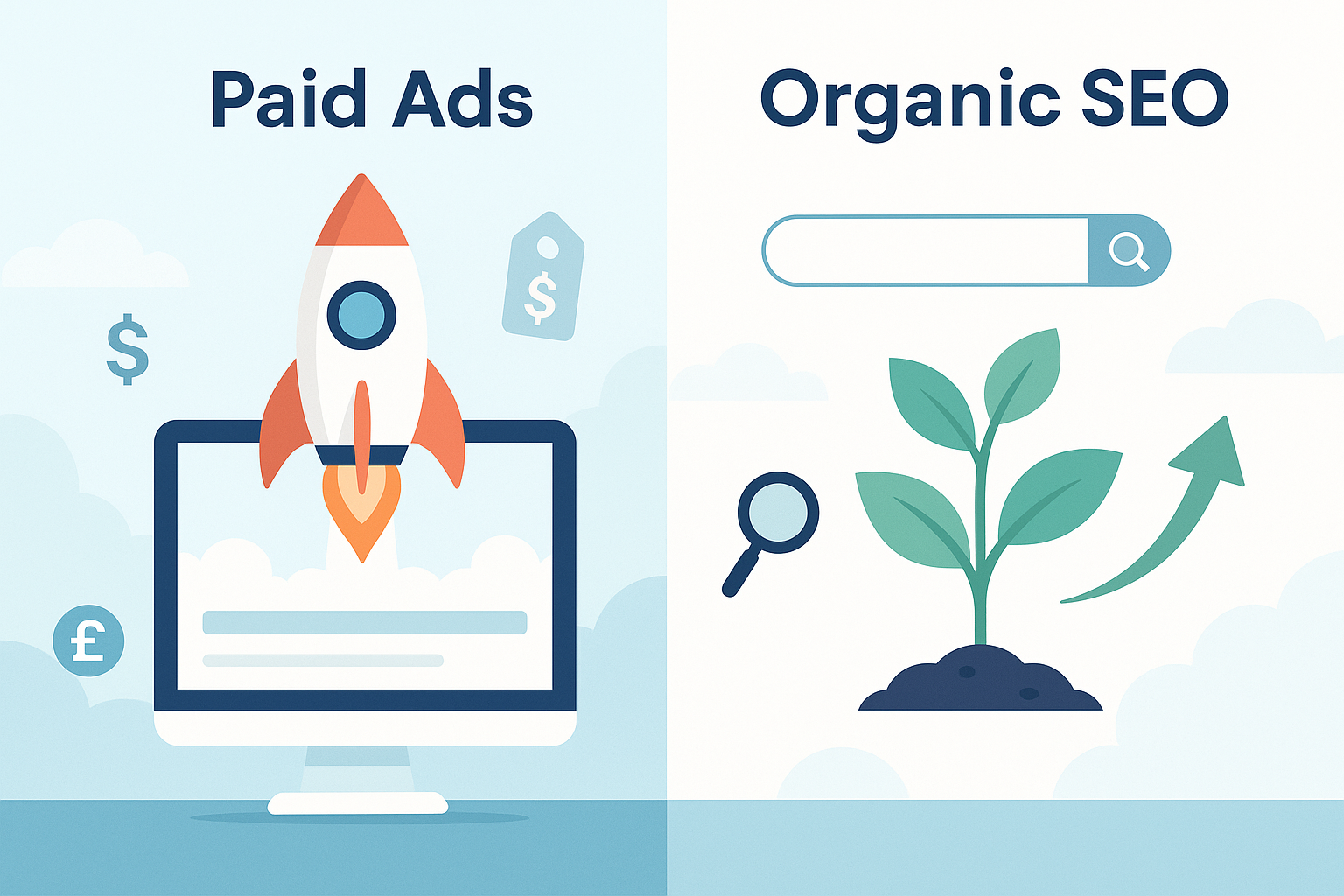
If you’ve gone to the trouble of designing a landing page, you want people to find it. Whilst ads and social posts can drive short-term traffic, search engine optimisation helps the keep working long after the initial push.
Studies show that 49% of marketers report that organic search has the best ROI of any marketing channel. That's because SEO is effectively free and helps capture users who are actively searching online for whatever it is your business offers.
Whether your landing page promotes a product launch, seasonal campaign or content-led offer, giving it a search-friendly structure increases its long-term visibility and overall performance.
How to Optimise a Landing Page for SEO
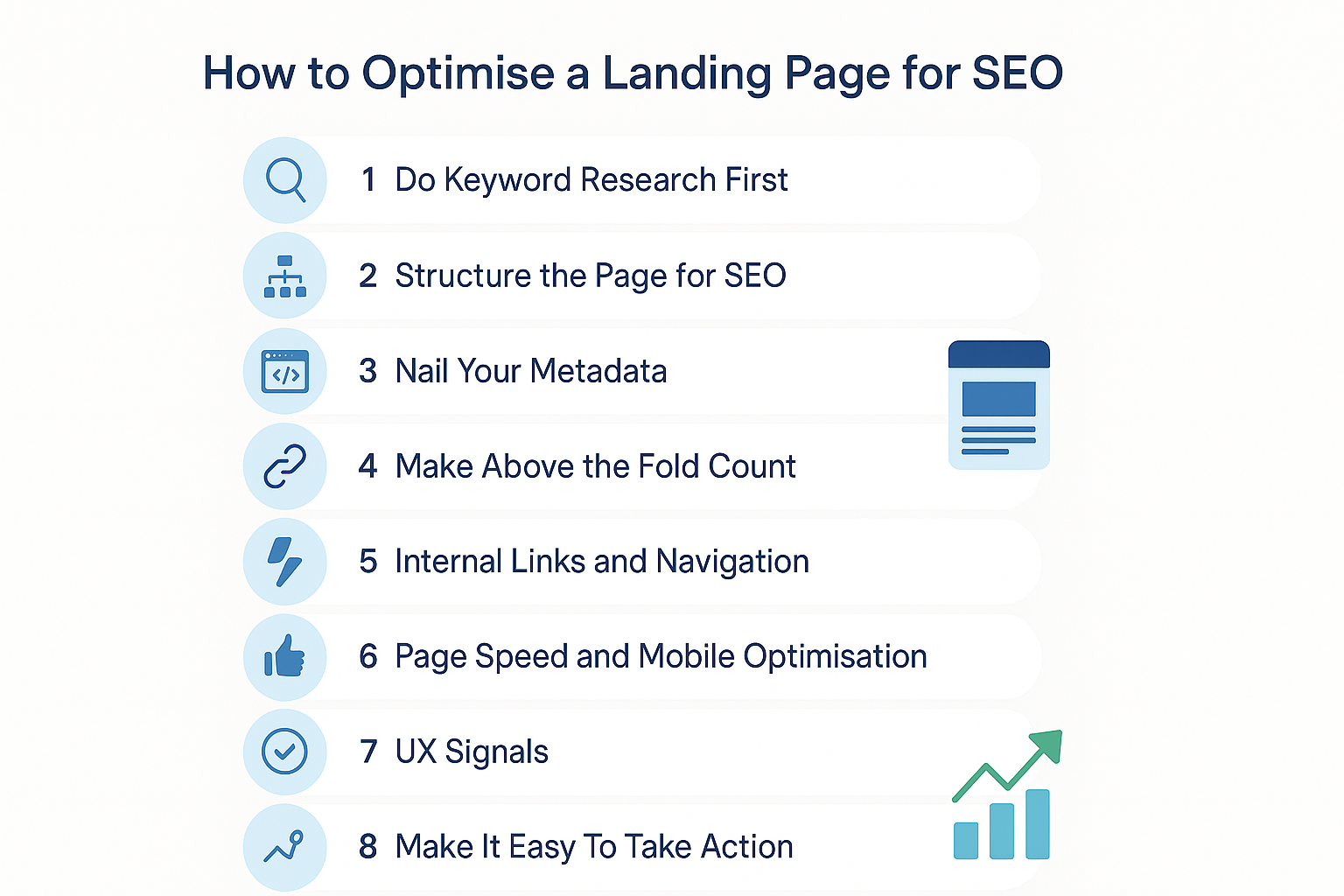
We've already covered the importance of SEO on your landing pages. Here’s how to optimise them step-by-step.
1. Do Keyword Research First
Before optimising for search engines, you need to make sure people are actually searching for the topic your landing page covers. This is where keyword research comes in. Keyword research helps you uncover the exact things people are typing into search engines related to your products or services.
Think about how someone might try to find your product or offer using Google. What would they actually type? From here, there are a few tools and methods available for discovering the actual search terms people use.
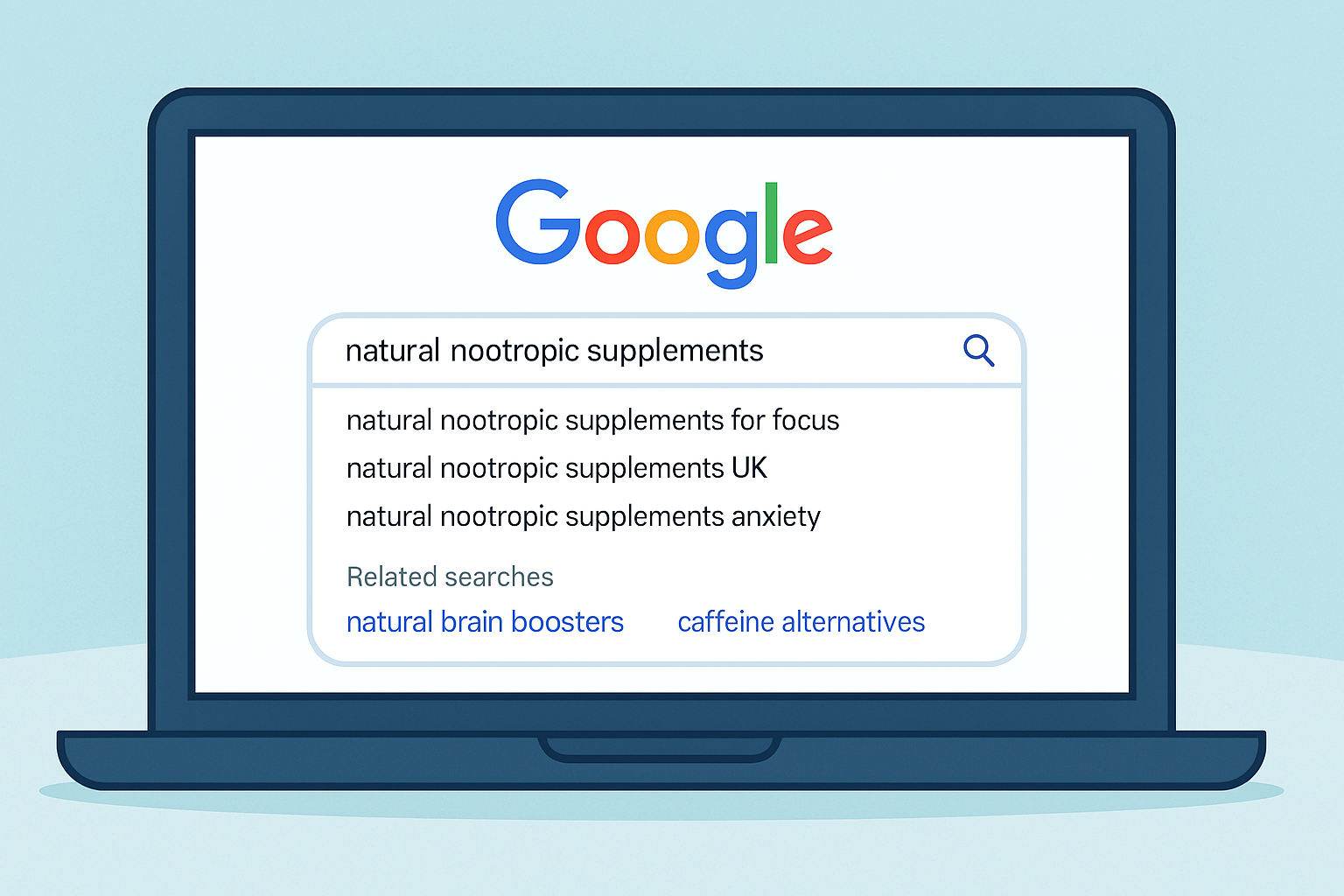
One of the simplest ways to start is by typing a few broad terms into Google and seeing what autocomplete suggests.
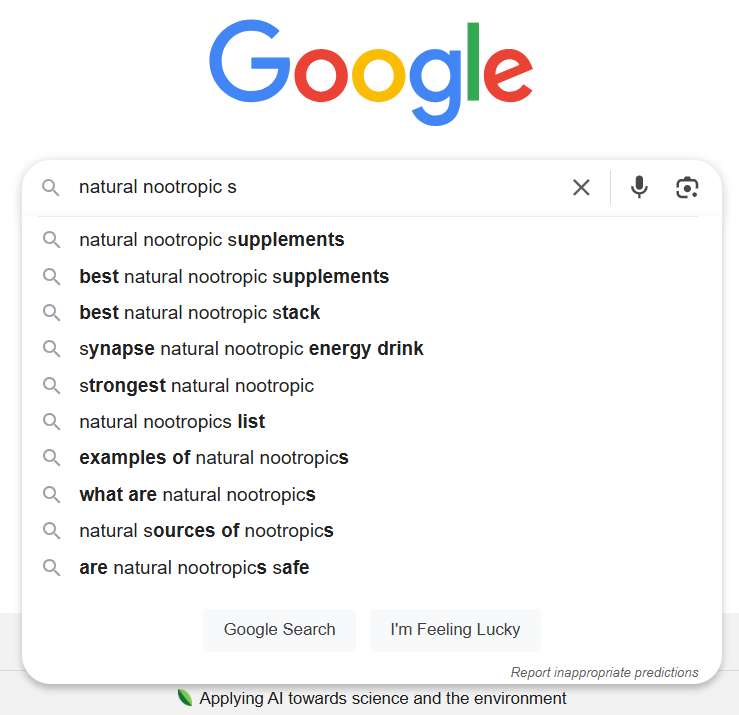
If you click on one, scroll to the bottom of the results page and you’ll also see a list of related searches. These give you a quick look at what else people are searching for around the topic. You can also try websites like AnswerThePublic, which show you real questions people are asking around your topic in a visual format.
If you have a Google Ads account, you can use the free Keyword Planner to explore real search data. If not, paid SEO tools like SEMrush, Ahrefs or Moz can help you dig into search volumes, trends and competitor keywords for more detailed insights. Although paid, these tools usually offer free trials if you sign up for an account.
As you explore keywords, look out for a few key metrics:
- Search volume – Are people actively searching for this term?
- Keyword difficulty – How competitive is it, and how likely are you to rank?
- Search intent – Does the keyword fit the kind of page you’re building?
- Quick win opportunities – Long-tail keywords often have lower competition and can be easier to rank for, especially if your site is still growing.
Once you’ve chosen a primary keyword and some secondary keywords, you’ll want to include them in key areas of your landing page such as your H1, page title, metadata and main content. We'll cover these elements in more detail further down in this post.
Keyword research removes the guesswork and gives you clear direction, helping you shape your page around the language your audience actually uses.
2. Structure the Page for SEO/Readability
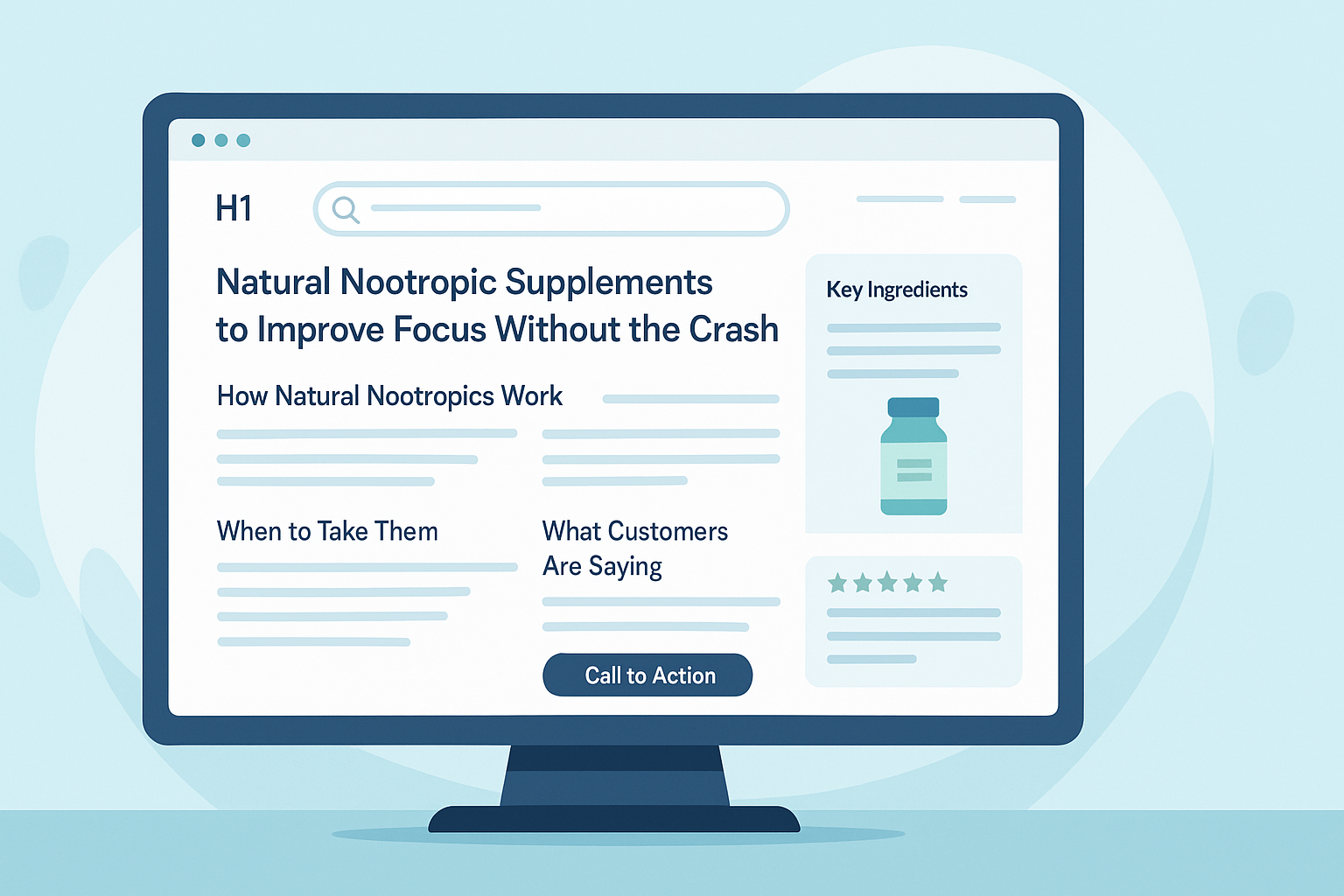
Once you’ve chosen the right keywords, the next step is to structure your landing page in a way that helps both users and search engines understand the content. A clear layout, with properly used headings and logical sections, makes the page easier to read for users and search engine crawlers.
For example, if you’re promoting a supplement to help with focus and mental clarity, and you’ve identified "natural nootropic supplements" as your primary keyword, your H1 might be:
“Natural Nootropic Supplements to Improve Focus Without the Crash.”
This keeps it specific, intent-driven and keyword-aligned, which is exactly what a dedicated landing page should aim for.
Below your H1, use clear subheadings (H2s and H3s) to break up your content and guide the reader. Aim for a logical flow, keeping each section focused on one idea. In the natural nootropic supplements example, you might structure the page with sections like “How Natural Nootropics Work,” “Key Ingredients,” “When to Take Them” and “What Customers Are Saying.”
Avoid large, unbroken blocks of text. Use short paragraphs, bullet points and bolded highlights to make the page easier to scan. Your visitor should be able to glance through and quickly pick up the key points, especially if they’re viewing on mobile. This approach will improve the user experience (UX), which is a key factor in search engine rankings.
You should also include supporting features alongside the text, like product images, videos and customer reviews. These should be positioned where they offer the most value to the user, whether that’s reinforcing your message, demonstrating the product in use or building trust with social proof.
Here's a quick checklist to review your page layout:
- Is it easy to scan?
- Is the content nicely structured in small chunks with headings?
- Do my headings contain keywords?
- Is my value proposition clearly stated?
- Is it clear what action the user should take?
- Are images, reviews and videos present to offer a more dynamic and relatable experience?
If your landing page does a good job of the above, then it’s well-optimised for both search engine crawlers and website visitors.
3. Optimise Your Metadata

Before your landing page even loads, your metadata is what potential visitors see in the search results. A strong meta title and meta description not only help search engines understand your page but also play a big role in whether someone actually clicks through. It’s effectively your shop window, creating the first impression that can make someone stop and visit your website or scroll past entirely.
Your meta title should include your primary keyword and should clearly summarise what the page is about along with any key benefits. Keep it under 60 characters so it doesn’t get cut off, or, 'truncated' in search results. A good title is concise, relevant and compelling enough to encourage clicks without feeling stuffed with keywords.
Let’s take the same example from earlier. You’re creating a landing page for a range of supplements aimed at improving focus and mental clarity, and you’ve identified "natural nootropic supplements" as your primary keyword.
A good meta title might be:
“Shop Natural Nootropic Supplements – Fast UK Delivery”
This combines the main keyword with a transactional word (“shop”) and a clear benefit (“fast UK delivery”). It not only signals to search engines that the page is transactional, but also gives potential customers a reason to click.
Your meta description should expand on the title by giving users a clear reason to visit the page. Although it doesn’t directly affect rankings, it does influence click-through rates, so it’s certainly worth getting right. Aim for under 160 characters so the end of doesn't become truncated, include your main keyword naturally and highlight what sets your page apart. Think of it as your short sales pitch in the search results.
Here’s an example for the same landing page:
"Discover our range of natural nootropic supplements designed to support focus and energy. Fast, reliable UK delivery on every order. 10% off first order."
4. Optimise the “Above the Fold” Section
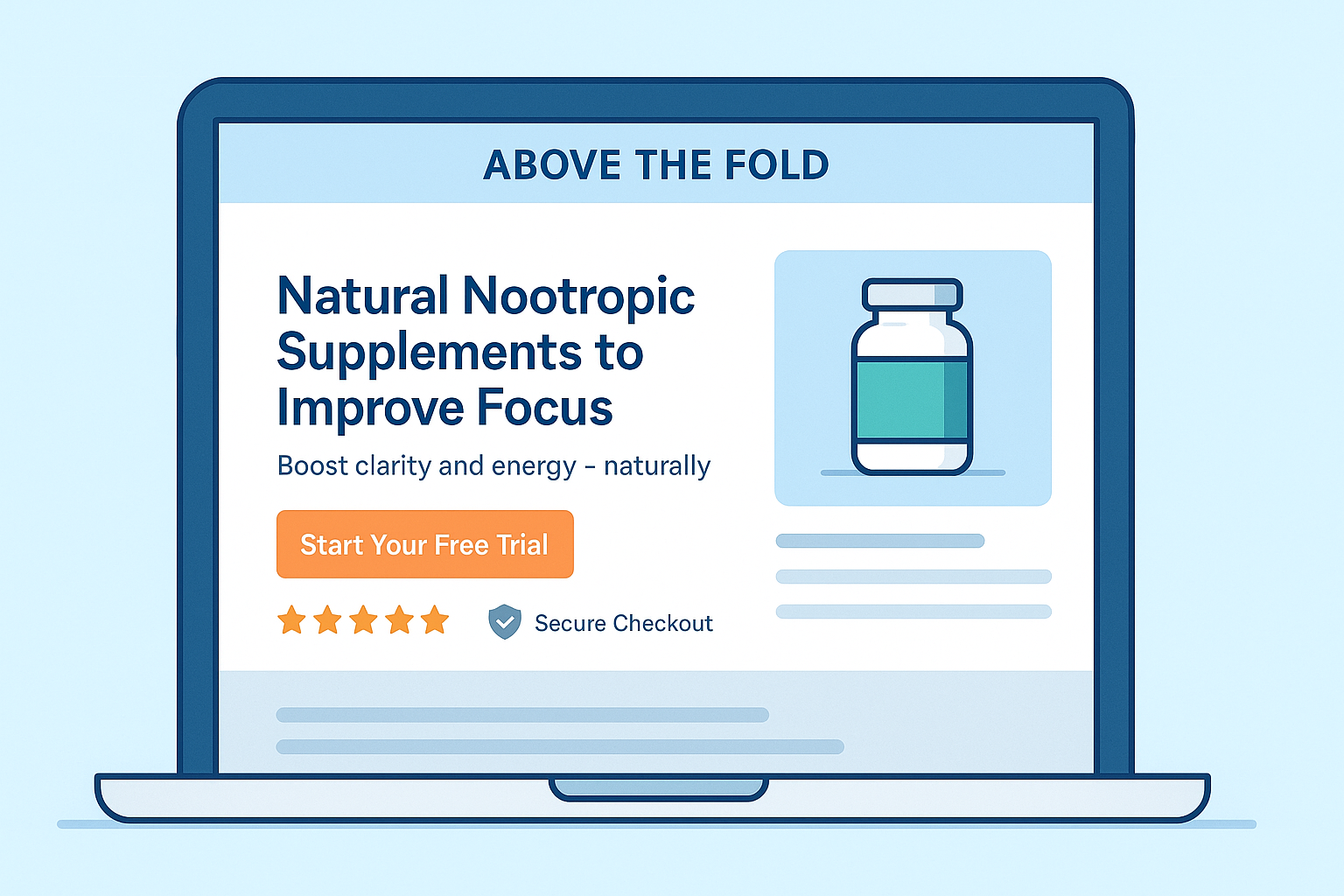
The part of your landing page that’s visible before someone scrolls, often called “above the fold,” is some of the most valuable space on the page. It’s the first thing people see, and it can often decide whether they stay or leave.
Beyond making an impression on users, many search engines also consider near-the-top content more important, meaning it can carry more weight for your rankings.
Your H1 should already be in place by this point, clear, keyword-led and relevant to the search intent. But above the fold, it’s not just about the headline. You need a strong supporting statement or subheading that quickly explains what the offer is, why it matters or what problem it solves. This gives users instant context and adds emotional or practical weight to the headline.
You should also include a clear, noticeable call-to-action (CTA) above the fold — something like “Shop Now,” “Claim Your Free Sample,” or “Start Your Trial.” Even if you include these at the bottom of the page, having them at the top too can capture the impulses of people looking to click fast. You want users to immediately understand what the next step is without even having to scroll.
The CTA should stand out visually, using a contrasting button colour or bold design that catches the eye without clashing with the rest of the page. To reinforce the CTA and build trust, consider placing supporting visuals nearby like a product photo, customer rating or “trust” badges. These small details can help reduce hesitation and guide the user toward taking action right away.
Getting your above-the-fold content right means users quickly understand the value of your landing page and are more likely to stay and, more importantly, take action!
5. Use Internal Links to Support SEO and Navigation
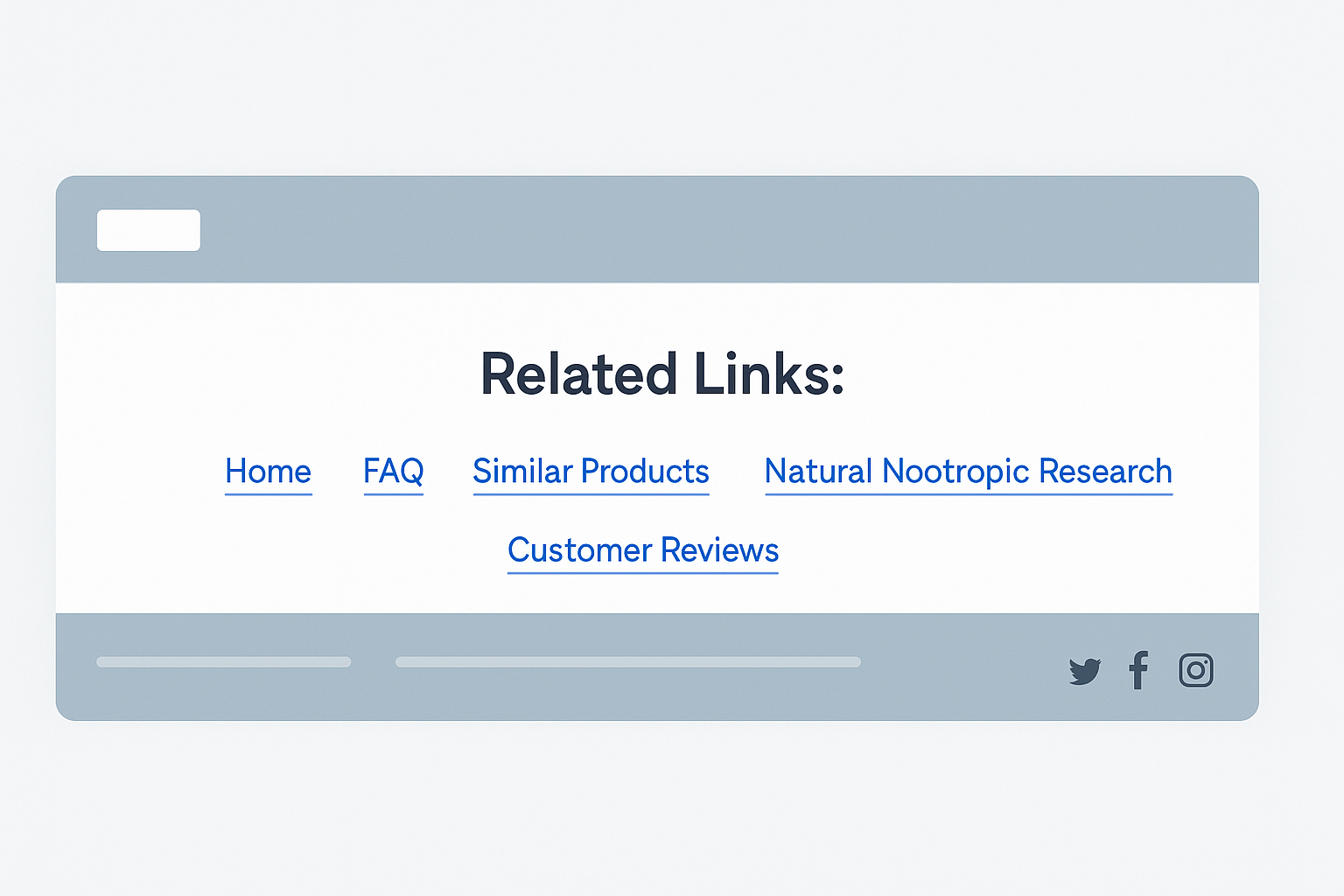
When someone lands on your page, it shouldn’t be a dead end. Internal links connect your landing page to the rest of your website, helping visitors explore and making it easier for search engines to understand your site structure.
Put simply, internal links are links from one page on your site to another. They guide users toward related content, keep them engaged and help highlight which pages matter most. A well-linked landing page is more discoverable, both by users and by Google.
For example, you might link to your landing page from blog posts, related product categories or your homepage to help drive traffic and establish relevance. You can also link from your landing page to useful supporting pages like FAQs, reviews or guides.
Use natural, descriptive anchor text so visitors know exactly what to expect. Instead of vague phrases like “read more,” go for specific ones like “explore our plant-based protein range.”
A few well-placed internal links can improve SEO, boost engagement and make your site easier to navigate — all of which helps your landing page perform better.
6. Optimise for Page Speed and Mobile
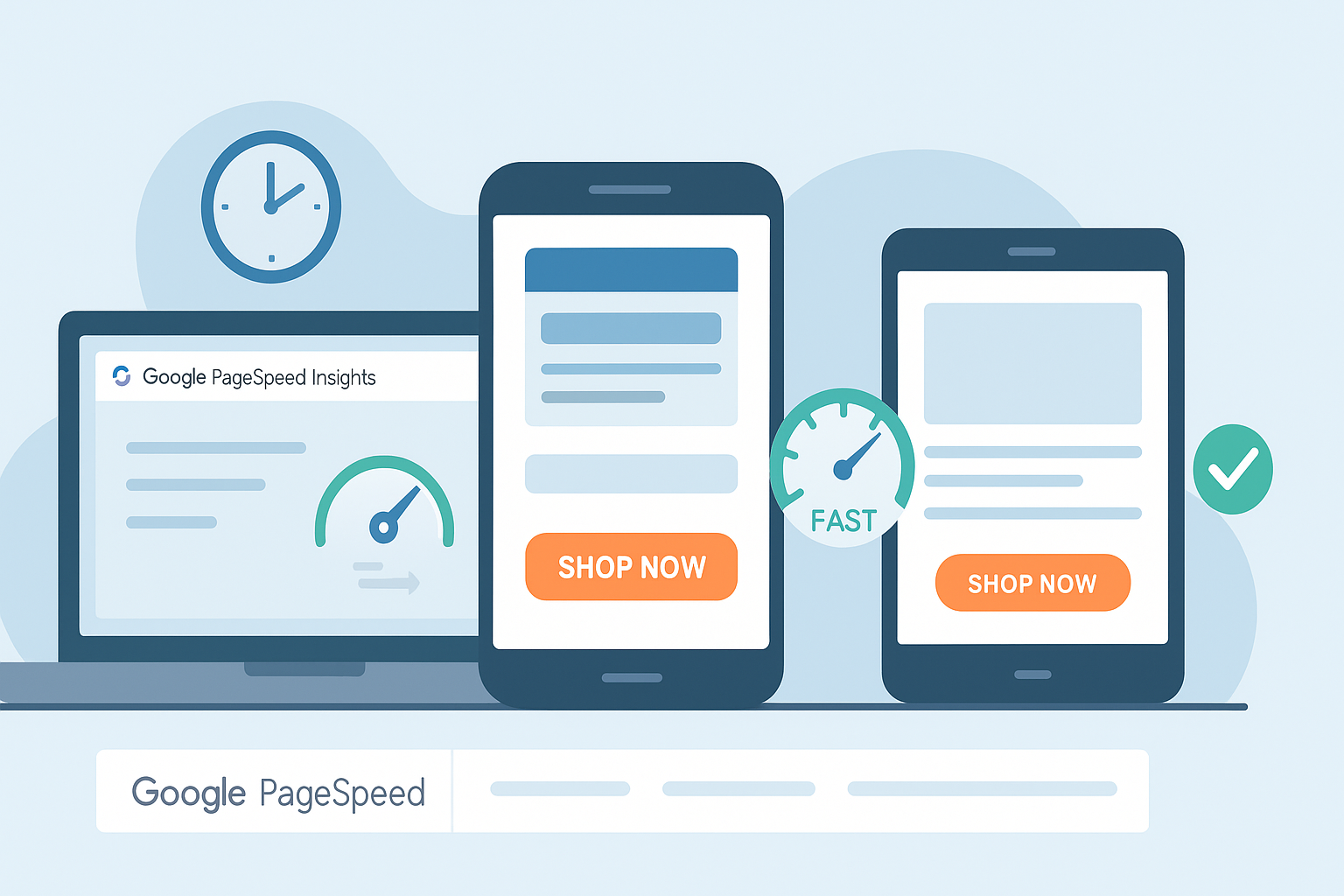
Search engines prioritise websites that load quickly and work well on all devices — especially mobile. If your landing page is slow or hard to use on a phone, you’ll not only frustrate users but also could hurt your potential rankings.
Start by testing your page using tools like Google PageSpeed Insights or GTmetrix. These will flag any performance issues, such as large images, render-blocking scripts or unoptimised code. Most platforms also offer mobile previews so you can spot layout problems early.
Aim for a fast, responsive design that loads smoothly on all screen sizes. Avoid clutter, compress images where needed and keep pop-ups minimal. A mobile user should be able to view the page comfortably, read key information easily and tap your CTA without zooming in or hunting for it.
Improving speed and mobile usability isn’t just about SEO. A slow-loading page can directly impact your conversion rate. A better experience leads to higher engagement and fewer lost opportunities.
7. Improve UX Signals That Influence SEO
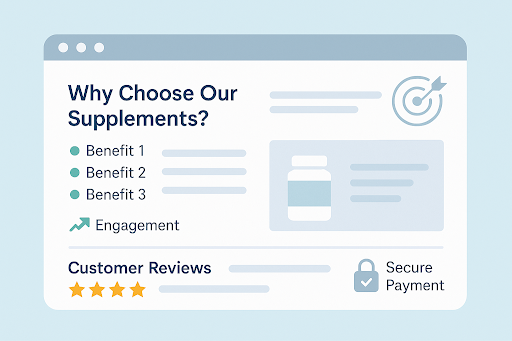
Search engines pay close attention to how users interact with your page. If people land on your site and quickly leave, that’s a signal something’s not quite right. But if they stay, scroll, engage and click, then it shows the page is relevant and useful.
These behavioural patterns are often referred to as “UX signals” (user experience signals), and whilst they’re not officially confirmed ranking factors, they strongly influence how search engines evaluate your page.
Here’s how to improve them:
Match content to intent: Make sure the content lines up with what the user was searching for. If your page promises information or a product and doesn’t deliver, users will bounce.
Make it skimmable: Use headings, bullet points and short paragraphs to make the content easy to digest — especially on mobile.
Minimise friction: Avoid pop-ups that interrupt reading, slow-loading elements or confusing layouts that make it hard to navigate.
Include visual cues: Icons, trust badges, product photos and star ratings help users orient themselves quickly and reinforce confidence.
The better the experience, the more time users will spend on your page, and the more likely they are to convert. That's why prioritising UX ultimately helps both your rankings and your revenue.
8. Make It Easy to Take Action
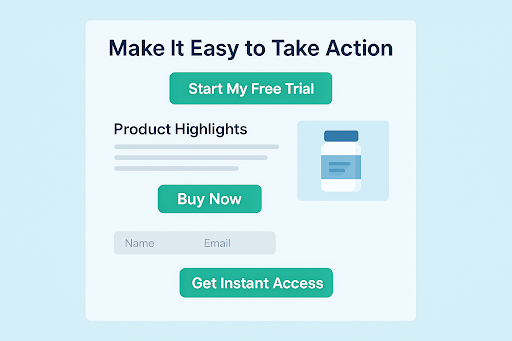
The whole point of a landing page is to get users to do something. Whether that’s buying a product, signing up for a newsletter, or starting a free trial, the action should be clear and easy to take.
Start with a strong, benefit-led call-to-action (CTA). For example, on a product-focused page, this could be something like “Buy Now,” “Start My Free Trial” or “Get 10% Off Today.” Avoid vague wording — your CTA should tell users exactly what they’ll get and what happens next.
Place your CTA in key spots across the page: at the top, after your main points and again near the bottom. Repeating it in the right places gives people multiple chances to act, depending on when they’re ready.
A few quick tips to improve CTA performance:
Use button text that focuses on the outcome, not the process.
Make the button stand out with colour and spacing.
Keep the surrounding area clean so the CTA grabs attention.
Also, remove anything that might slow people down. That could mean reducing the number of fields in a form, skipping unnecessary steps or reassuring them with short, clear messaging about what to expect after clicking.
The easier you make it to act, the more likely people will follow through.
9. Track Performance and Improve Over Time
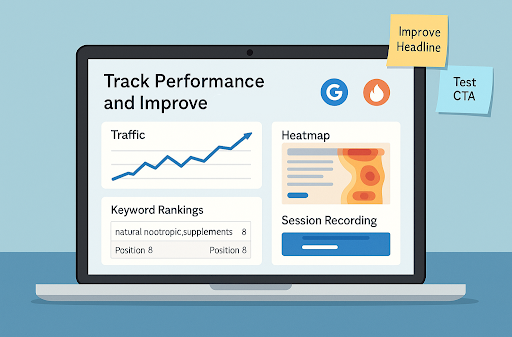
No landing page is perfect the first time around. The best-performing pages are usually the ones that have been tested, refined, and improved based on real data.
Start by setting up tracking with tools like Google Analytics and Google Search Console. These can show you how people are finding your page, how long they stay, what they click on, and whether they convert. You can also track search visibility, impressions, and keyword rankings over time.
If your goal is sales or sign-ups, monitor your conversion rate. If people are dropping off quickly, you may need to revisit the offer, layout, or copy. If you’re getting traffic but not from relevant search terms, you might need to refine your metadata or keywords.
Tools like Hotjar or Microsoft Clarity can also help. They show you heatmaps and session recordings so you can see where users are pausing, scrolling, or giving up. This gives you real insight into how your landing page actually performs — not just how it looks.
As your data builds, keep tweaking. Test new headlines, reposition your CTA, improve loading times, or try different imagery. Even small changes can lead to better results.
In short: treat your landing page like a living asset. Keep measuring, keep learning, and keep improving.
Conclusion – Make Sure Your Site Is Optimised for Success
A landing page isn’t just something you build and hope for the best. If you’ve put time into the design, message and offer, don’t let it go unnoticed. With a bit of SEO thinking woven in, you can turn that page into a high-performing asset that not only looks good but keeps working to bring in clicks, sales and results long after launch.
Use the steps above as a checklist. Start with keywords. Get your metadata right. Sharpen what’s above the fold. Then build out everything else around clarity, relevance and usability. Do it right, and your landing pages won’t just sit there — they’ll rank, convert and pay off.
If you’re using ShopWired, you’ve already got a head start — with user-friendly themes built with SEO in mind, plenty of SEO features to help your pages rank and a team of ecommerce marketing experts ready to support your growth through our tailored SEO services.
Not on ShopWired yet? Start your 14-day free trial today. No obligation, just everything you need to build a better, more visible ecommerce site.