Create your own ecommerce website and start selling successfully with ShopWired today


5 Tips for Creating Product Descriptions That Sell
When you’re running an online store, your product descriptions are one of the most important tools you’ve got — but they’re also one of the most overlooked.
Plenty of businesses spend hours perfecting their images and pricing strategy, but when it comes to the description? A few vague lines of copy and a list of bullet-pointed features. The truth is, that small block of text could be the difference between a browser and a buyer.
That’s because when people shop online, they’re not just looking at the product — they’re looking for assurance and confidence. They want to know what it feels like to own it. What makes it better than the rest. Whether it’s right for them. And the words you choose can either answer all that… or leave them guessing.
In this guide, we’ll walk through five simple but powerful tips to help you write product descriptions that actually help sell. jargon. Whether you're launching your first product or refreshing your bestsellers, these tips will help you maxmise your chances of success.
Let’s get into it.
Table of Contents
- Why Product Descriptions Matter More Than You Think
- The Benefits of Having Strong Product Descriptions
- 5 Tips for Writing Product Descriptions That Actually Sell
- Final Thoughts
Why Product Descriptions Matter More Than You Think
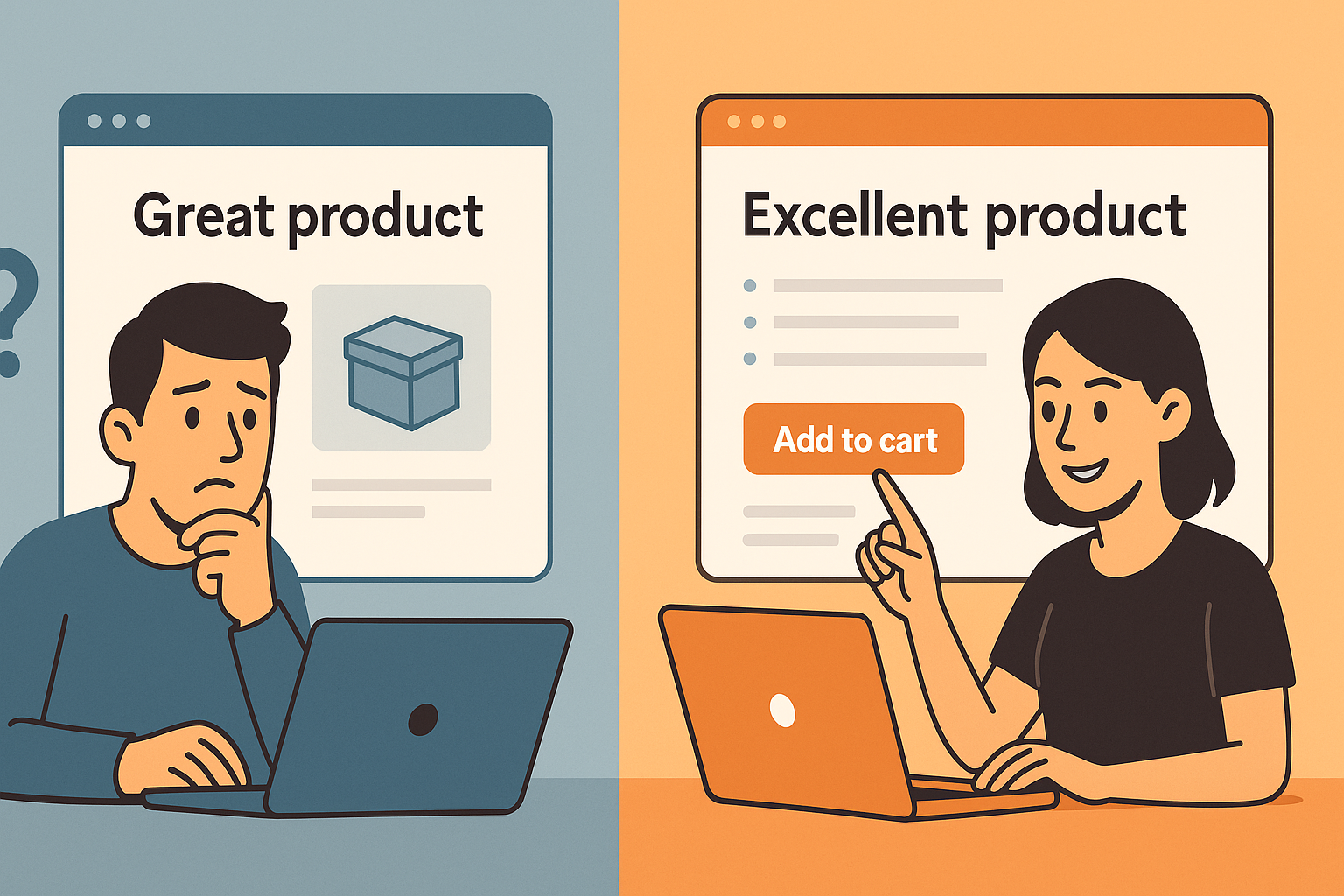
When someone lands on your product page, they've already shown interest in what you’re selling. But what they read next can make or break the sale.
A compelling product description does more than list features or overwhelm with technical jargon—it should build confidence. It should tell the customer what the product is, why they need it and how it fits into their life. A weak product description can leave potential customers with questions, hesitation or worse — a reason to look elsewhere.
In fact, 87% of people consider product descriptions to be crucial when making buying decisions, and 78% said accurate and well-written product descriptions can increase conversion rates by 78%.
In a world where customers can’t touch, hold or try what you’re selling, every word counts. A well-written description can spark interest, build trust and nudge someone over the line. But if the message is unclear, flat or forgettable, the opportunity to convert can slip away just as quickly.
The Benefits of Having Strong Product Descriptions
Clear, helpful product descriptions make it easier for people to buy from you. They explain what the product is, who it’s for and why it’s worth choosing over similar products listed elsewhere.
Product descriptions also support other parts of your business. From improving how your pages rank on Google to lowering return rates and helping customers feel more confident, good descriptions do more than you might expect.
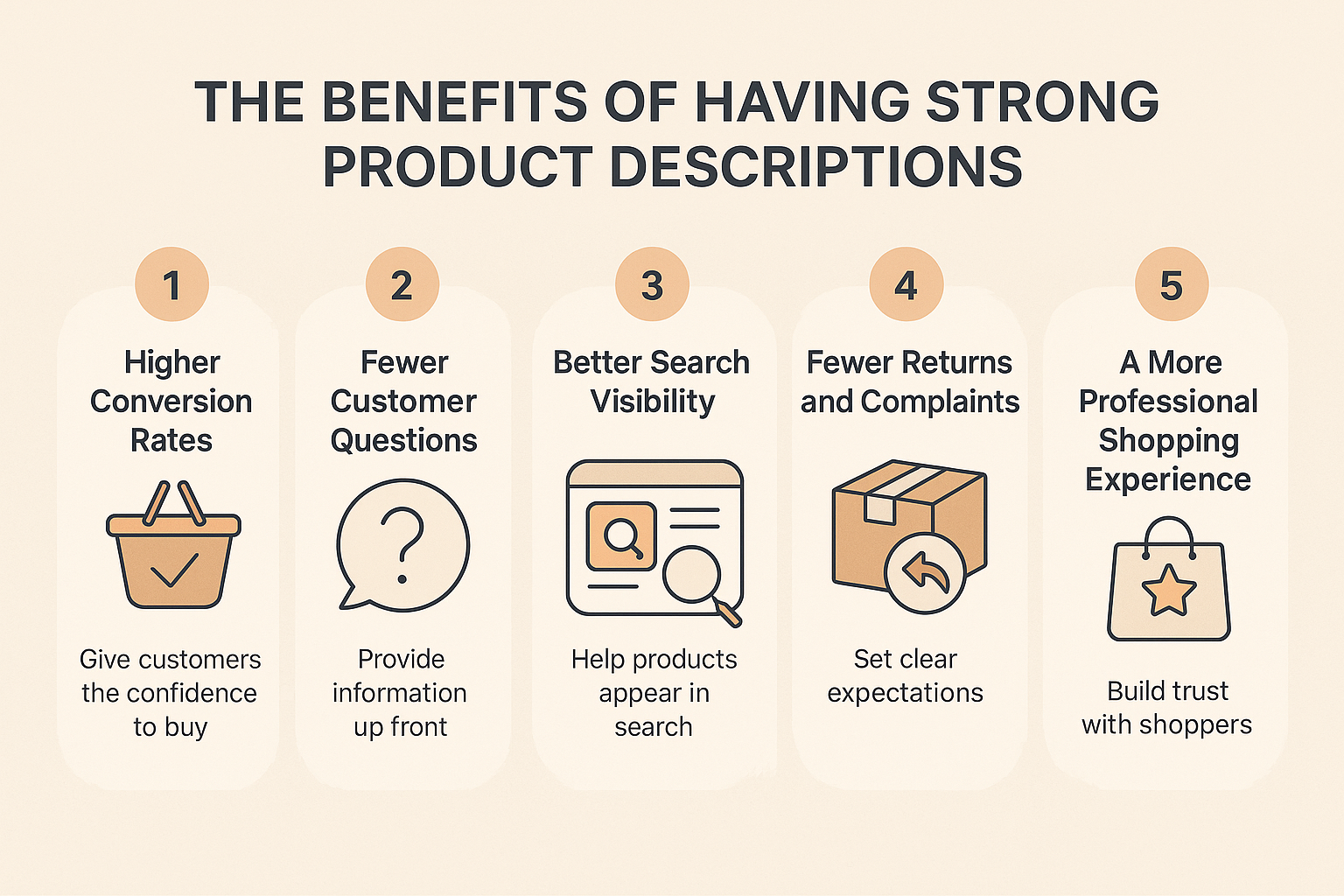
Here are five ways better copy can make a real difference to your store:
1. Higher Conversion Rates
When someone visits your product page, they’re usually not far from making a decision. A clear and confident description can give them the certainty they need to go ahead and buy.
Good copy removes doubt. It answers the questions they’re already asking and makes the next step feel easy. That means more of your visitors turn into customers.
2. Fewer Customer Questions
Strong product descriptions help customers find the information they need without having to ask. When details like size, materials, usage or compatibility are clearly explained, there’s less need for follow-up emails or support messages.
This not only saves you time, but also gives shoppers a smoother experience. The more confident someone feels while browsing, the more likely they are to complete their purchase.
3. Better Search Visibility
Well-written descriptions can help your products appear more often in search engines like Google. By clearly describing what the product is and using natural, relevant wording, you're giving search engines more to work with and therefore a better chance of matching your page with the right customer.
The more useful and specific your content is, the more likely it is to show up for people who are actively looking to buy something like it. This means more people can find your products without paid ads. Over time, strong descriptions can help you build a steady stream of organic traffic from the right customers.
4. Fewer Returns and Complaints
When customers know exactly what to expect, they’re less likely to be disappointed when the product arrives. A clear description can help avoid confusion about size, usage, features or what’s included — which means fewer returns and complaints.
It also builds trust. People feel more confident buying from stores that are upfront and informative, especially when they're shopping online and can’t see the product in person.
5. A More Professional Shopping Experience
Strong product descriptions help your store feel consistent, polished and reliable. When every product page is well-written and easy to understand, it gives customers a better impression of your brand as a whole.
Clear communication builds trust. When your product pages feel informative and upfront, customers are more likely to feel confident hitting the buy button.
5 Tips for Writing Product Descriptions That Actually Sell
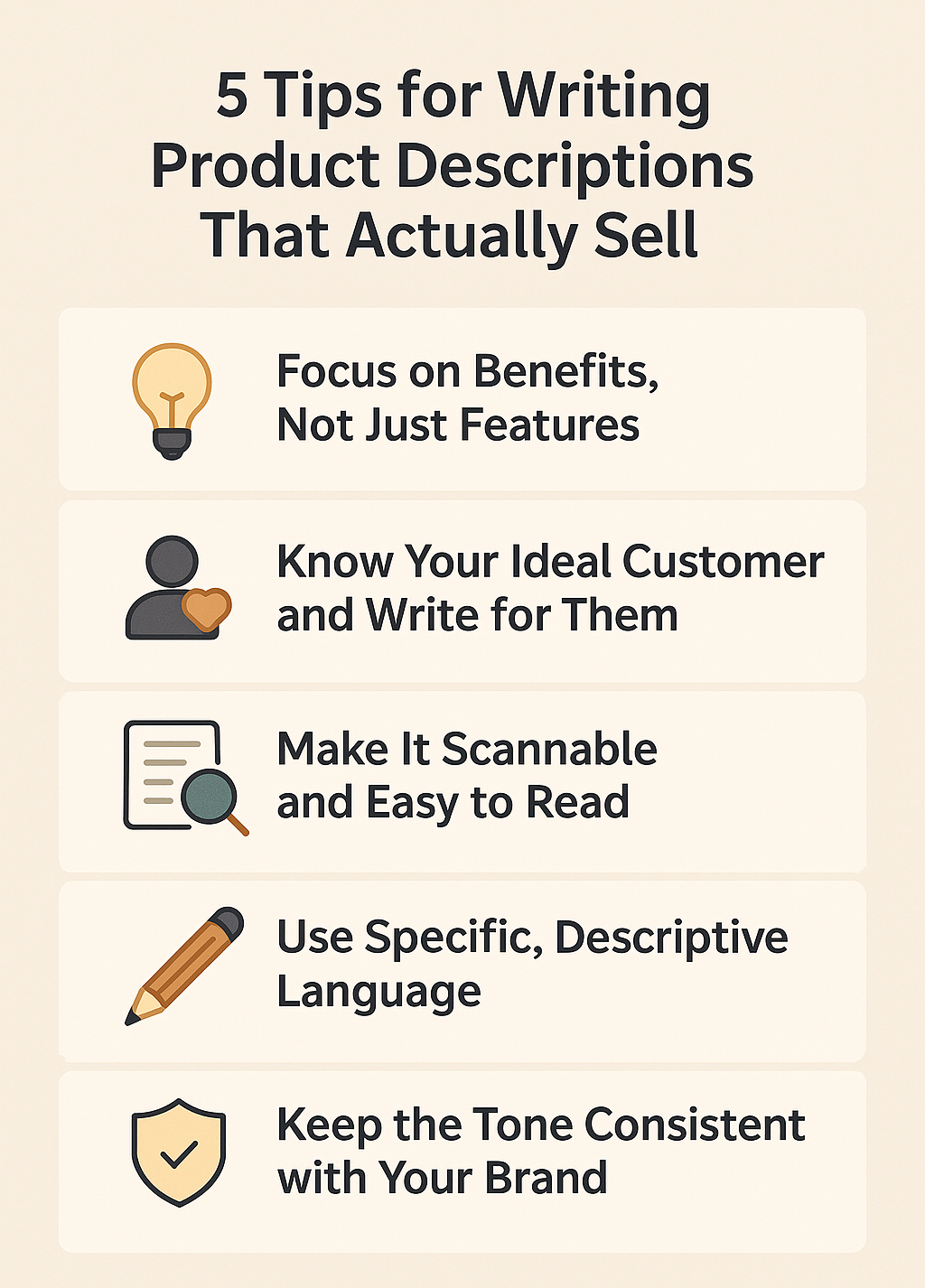
Now that we’ve covered why product descriptions matter and the impact they can have, let’s get into the practical part — how to write them well.
These five tips will help you write descriptions that not only sound better but help persuade people to buy your products. Whether you’re starting from scratch or improving existing pages, each tip is designed to help you connect with customers and turn interest into action.
1. Focus on Benefits, Not Just Features
Most product descriptions jump straight into features: size, materials, speed, weight, specs. And yes, these are important. But they’re not what makes people buy.
A feature tells you what something is. A benefit tells you why it matters.
Think about what your customer actually wants. They're not just looking for a standing desk made of oak. They’re looking for more calories burned in their workday. Less back pain. A workspace that fits their routine, their lifestyle and feels good to use.
You can highlight the benefit first, then back it up with the feature. Like this:
“Stay energised, burn more calories and reduce back pain with this adjustable standing desk. Designed for smooth transitions between sitting and standing, it helps improve posture and boost focus throughout the day — with solid oak legs for long-lasting strength.”
It leads with how the product helps them feel or perform better, and then brings in the practical details.
Here’s another example. Let’s say you're selling a pair of orthopaedic shoes. You could say:
“Engineered with triple-density foam and motion-control technology.”
That’s the feature — but it’s meaningless unless you’re a chiropodist.
Now reframe it like this:
“Designed to reduce joint pressure and improve alignment, these shoes help you stay comfortable on your feet for longer — whether you're walking the dog or working a full shift. No more pain to ruin your day.”
Then you can follow up with the science:
“Powered by triple-density foam and motion-control technology to support every step.”
That’s how you sell the benefit and give the detail — in the right order.
One brand that uses this approach effectively is Made by Zen, whose Fern Aroma Diffuser is sold through John Lewis. Instead of listing tank capacity or LED specs, the description leads with the outcome:
“The Fern Aroma Diffuser is created to boost your wellbeing.”
That’s the hook. It speaks to what the customer wants to feel. Only after that do they describe the look, the calming light, and the effect on your space — using phrases like:
“Soft glowing, atmosphere-calming ambient light”
“A beautiful object designed to adorn any home”
“Filling your room with your favourite scent”
It’s a product with practical function — but the description sells mood, comfort and emotion. That’s what resonates. The running time and oil details are there too, but they come later, as support.

That’s the power of leading with benefits: it makes the copy more persuasive and the product more desirable — without needing a hard sell.
2. Know Your Ideal Customer and Write For Them
The best product descriptions feel like they were written for you. That only happens when you know exactly who you’re selling to.
Before writing, think about your ideal customer. What do they care about? What kind of language do they use? What worries or priorities might they have when looking at your product?
Turn these answers into an ideal customer persona and picture them when you write. Speak their language. Match their tone. Build a sense of familiarity that makes the copy feel natural and persuasive.
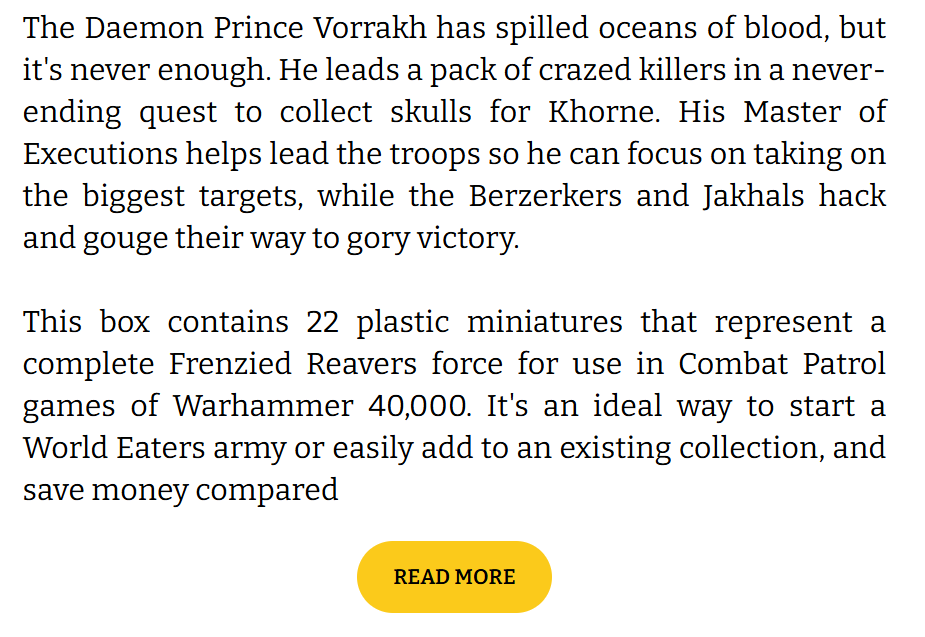
One brand that does this brilliantly is Games Workshop. Take their Warhammer 40,000 Combat Patrol: World Eaters product for example. Rather than starting with the number of miniatures or technical specs, they lead with:
“The Daemon Prince Vorrakh has spilled oceans of blood, but it's never enough. He leads a pack of crazed killers in a never-ending quest to collect skulls for Khorne…”
It’s written in the voice of the universe it belongs to — rich, immersive and completely tailored to the Warhammer audience. Only afterwards do they explain that the box includes 22 miniatures and how it can be used in gameplay.
Now imagine if it just opened with:
“This box contains 22 plastic miniatures used in Warhammer 40,000.”
It’s technically accurate — but it strips away everything that makes it interesting, exciting or relevant to the reader.
When your copy speaks to your audience directly — using their language, tone and values — it feels like it belongs. It builds trust, gets attention and makes people more likely to buy.
Whether you’re selling to fantasy gamers, skincare enthusiasts or dog owners, the key is the same: write like you're having a conversation with them and use language they’re familiar with.
3. Make It Scannable and Easy to Read
Most people don’t read product pages word for word — they scan. So your descriptions need to be structured in a way that makes key details easy to spot at a glance.
Use short paragraphs, simple headings and bullet points to break up dense blocks of text. This doesn’t just improve readability — it helps highlight the information that matters most, especially for people browsing on mobile.
If your ecommerce platform allows, consider setting up a tabbed layout or interactive sections. These let customers click through smaller, more digestible chunks of information — making your pages feel clearer and more user-friendly.
A great example of this is Apple’s product page for the iPhone 16:
- It opens with big, bold feature statements like “Personal, private, powerful” followed by a scrollable carousel, where users can switch between product highlights using simple icons or video.
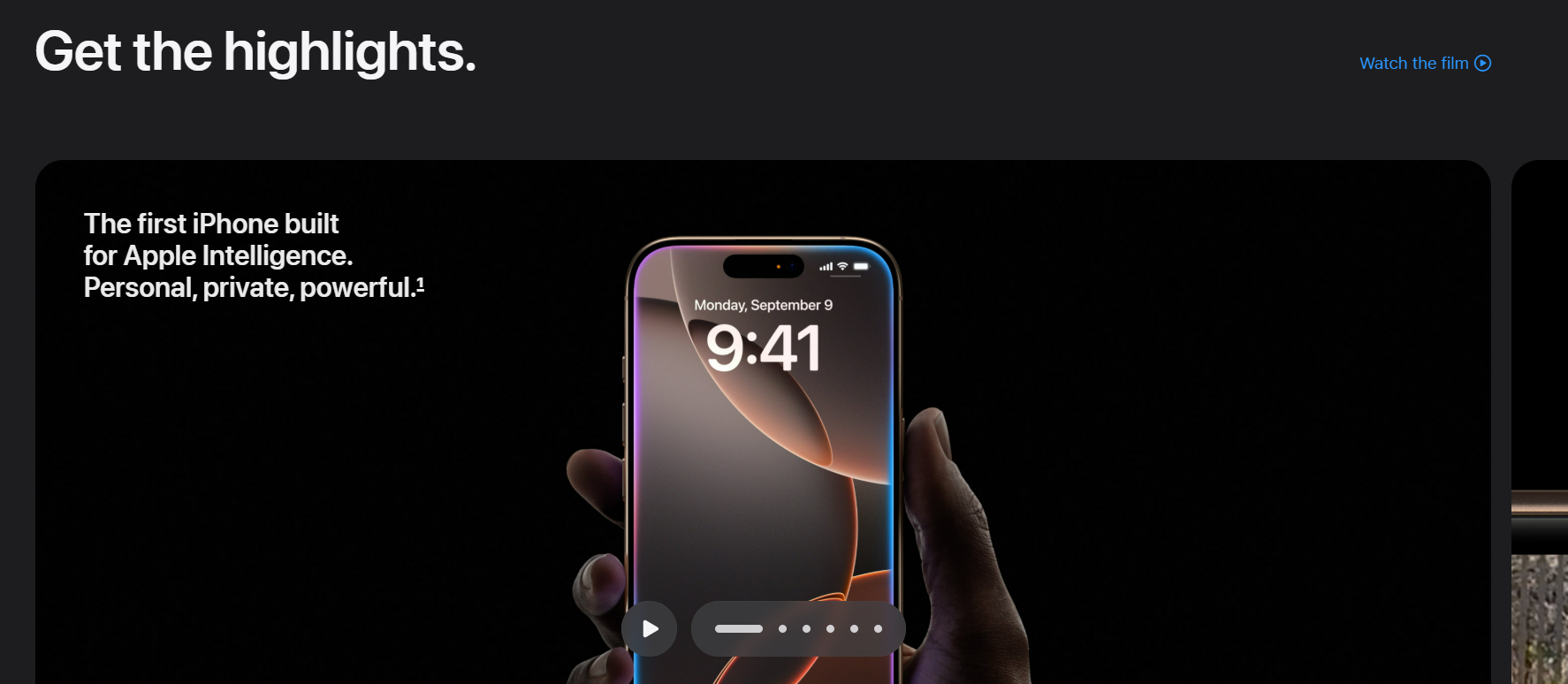
- As you scroll down the page, each feature appears in its own neatly styled section, pairing short punchy copy with immersive visuals — easy to digest whether you’re on desktop or mobile.

- Further up the page, users can tap a tab to access ‘Tech Specs’, which breaks down details like weight, size, capacity and materials into clear, bite-sized comparisons.

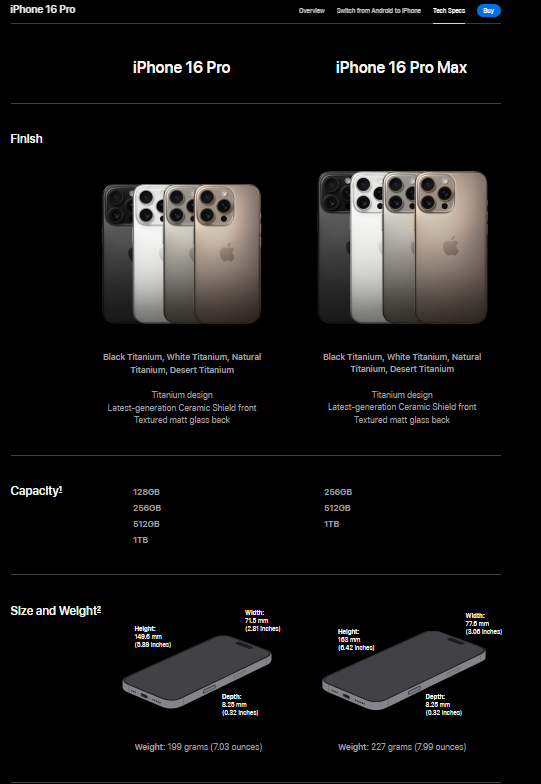
This example from Apple isn’t just good design — it’s smart copy structure. The important points aren’t buried in long paragraphs. Instead, the experience mirrors how people actually shop online: scanning, gathering key info, comparing, deciding.
Yours doesn’t need to be this complex or beautifully designed — even breaking up text into more manageable chunks makes a huge difference in keeping the page scannable and readers more engaged.
By making your product content easier to explore, you help customers get the clarity they need before making a purchase.
4. Use Specific, Descriptive Language
Generic copy is forgettable. Words like “high quality,” “excellent” or “nice design” don’t actually tell the customer anything. If you want your descriptions to stand out, get specific.
Describe materials, textures, flavours, finishes — anything that helps someone visualise or feel what it’s like to use your product. The more vivid the language and the more their senses can perceive it, the easier it is for the customer to imagine the experience of owning and using it.
You’ll often see this in food and drink. Take Nespresso’s product page for their Freddo Intenso coffee blend:
“This Arabica blend carries in beautiful balance the toasted cereal and woody notes and the classic bitter taste of a rich dark roast.”
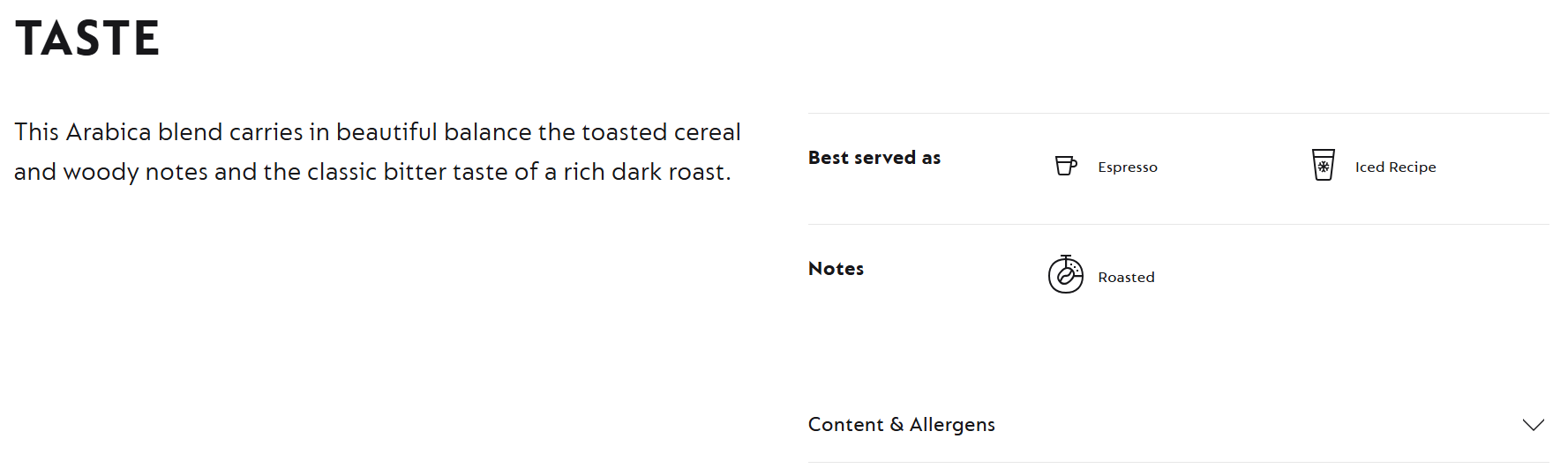
You can almost smell and taste it. You’re not just reading a list of ingredients — you’re picturing the taste, the aroma, the experience. Now compare that to something flat like:
“A high-quality, dark-roast coffee. Great flavour.”
Same product, completely different impact.
Good descriptions don’t have to be long — just precise. The more detail you give, the more likely it is to stick.
5. Keep the Tone Consistent with Your Brand
Your product descriptions don’t exist in a vacuum. They’re part of your wider brand experience — so the way you write them should match the tone your customers already expect.
If your tone is bold and energetic, your messaging should reflect that in the way you describe your products. If your brand is more calm and considered, your copy should feel thoughtful and measured too. And if you speak in plain, no-nonsense language elsewhere, your product pages shouldn’t suddenly start using flowery descriptions or clever puns.
Consistency helps build trust. When your tone feels familiar across your homepage, emails, ads and product pages, customers are more likely to believe in what you're saying — and feel confident buying from you.
Final Thoughts
Product descriptions aren’t just there to fill space — they’re one of the most important tools you have to help customers feel informed, confident and ready to buy.
From highlighting the right benefits to writing in a tone your audience actually connects with, small changes can make a big impact. Even something as simple as clearer formatting or swapping generic phrases for more vivid detail can help your product pages do a better job of selling.
If your descriptions haven’t been updated in a while, this is a good moment to step back and ask: are they really doing the product justice?
And if you’re using ShopWired, you’ve already got the tools to make these improvements. Add tabs, rewrite sections, test different formats — ShopWired has everything you need to help you turn browsers into buyers.
Not signed up yet? Start your 14-day free trial and see how ShopWired helps bring your products to life